


The Complete Guide
From the box to the shank, from width to hardness – everything you need to know before making the most important choice in ballet.
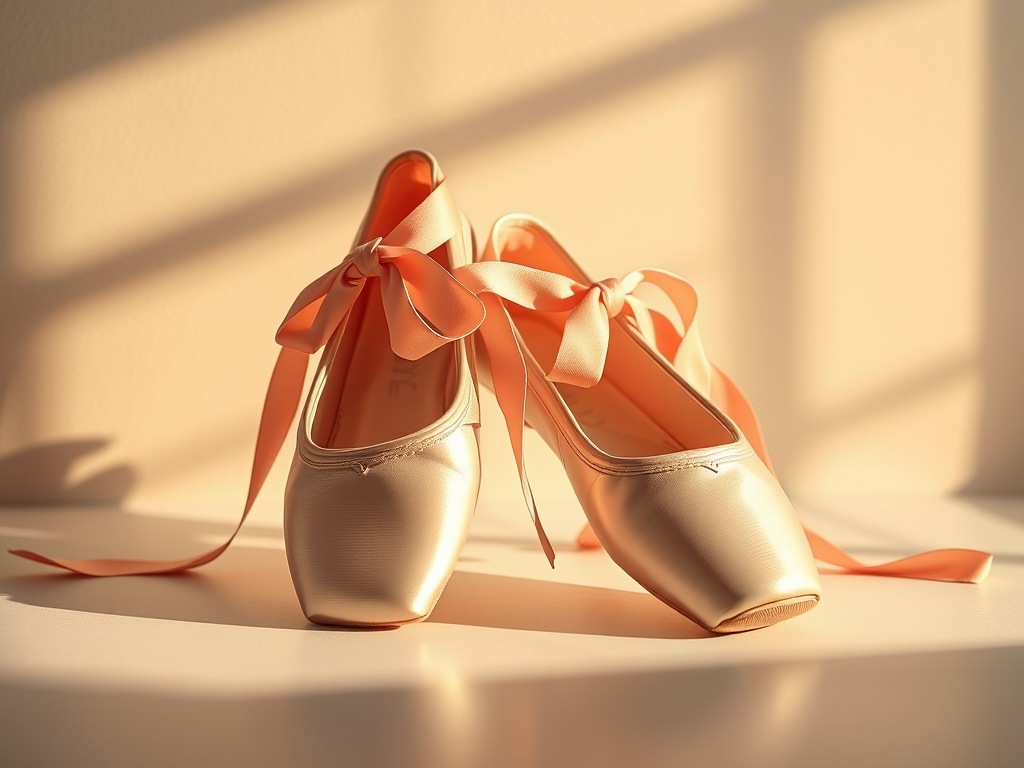
Pointe shoes are, without exaggeration, the most important piece of equipment for any ballerina. They are not just footwear – they are a tool that shapes technique, safety and even the length of a dance career. In this guide we will walk you step by step through everything you need to know.
Anatomy of a pointe shoe: what is what?
Before you choose, you need to understand what a pointe shoe is made of. Each part has a specific function and affects how the shoe feels when you are on pointe.
Box
The hard front part that encloses and supports the toes. Its shape and width determine comfort and the line of the foot.
Shank
The “spine” of the shoe – the stiff insole that supports the arch when you are on pointe. It can range from very soft to very hard.
Vamp
The length of the box on the top of the foot. A longer vamp gives more support; a shorter one makes it easier to bend.
Platform
The flat tip of the box that the ballerina stands on. A wider platform = more balance and stability.
The shape of your foot decides everything
Two feet of the same size can need completely different pointe shoes. That is why the shape of the front of the foot is the starting point for every choice:
| Foot type | Description | Recommended width |
|---|---|---|
| Egyptian foot | The big toe is noticeably longer than the others | Narrower (M) |
| Greek foot | The second toe is longer than the big toe | Medium (M–W) |
| Square foot | The first 3–4 toes are almost the same length | Wide (XW–XXW) |
Toe width is measured separately from foot length. You can have a small shoe size but a wide forefoot – in which case you need a pointe shoe with a wide box in a small size. That is why at mjdance.bg we offer pointe shoes in many combinations of size and width.
Shank strength: from Soft to Extra Strong
The shank should work in partnership with the foot – not instead of it, but not against it either. If it is too soft for a strong foot, you will “sink” in the shoe. If it is too hard, you will be fighting it instead of dancing.
- Flexible / Soft / Supple – Recommended for beginners and young dancers. The foot has to do more of the work and the shank follows the movement smoothly. Suitable for a more flexible foot with a still-developing arch.
- Regular – A balance between support and flexibility. Suitable for dancers with 2–3 years of regular training and moderate arch strength.
- Firm – For advanced dancers with strong feet and regular weekly classes. Gives good support during demanding technical work.
- Strong (STR) – For active dancers who train every day. Provides stability in pirouettes, balances and partnering.
- Extra Strong (XTR) and XStrong (XST) – For professionals and ballet academy students with long rehearsals. Holds its shape even under intensive load.
Never choose a harder shank on the idea that it “will last longer”. The wrong strength is a major cause of stress fractures, Achilles tendinitis and knee pain. Talk to your teacher before you buy.
The vamp: long or short?
The vamp is the top part of the box – from the top edge of the shoe to the opening. Its length has a significant effect on the feel and on technique:
Longer vamp: Gives more support to the toes and better stability in balances. Recommended for longer toes or a more flexible foot that needs extra support.
Shorter vamp: Allows the foot to “roll through” more easily and quickly in relevé. Preferred by advanced dancers with strong feet, for whom freedom of movement matters more than extra support.
With F.R. Duval, the box shape is part of the model name: V-DV for Duval1 thePro and U-DV for Duval3 theEuropean. If you are not sure which shape suits you, ask your teacher.
The right pointe shoe should not be felt – it should become one with your foot and extend it upwards.
The brands at mjdance.bg: which one is for you?
F.R. Duval – hybrid innovation for every level
Pointe shoes from the French brand F.R. Duval are designed in Paris by Franck Raoul-Duval. At mjdance.bg you will find Duval1 thePro (V-DV shape) in Flexible, Soft, Supple, Regular, Firm and Strong, as well as Duval3 theEuropean (U-DV shape) in the harder STR, XTR and XST. Widths range from M to XXXW. The hybrid construction combines a traditional handmade box with a modern Hytrel® shank which, according to the manufacturer, makes the shoe last up to 3 times longer. Every F.R. Duval purchase from mjdance.bg comes with a free gift – a Sansha T90AD toe pad.
Freed of London – a British classic
Freed of London is one of the best-known British pointe shoe brands. At mjdance.bg you will find the Classic Plus (Wing Block) with medium strength and reinforced side wings, as well as the Studio II with a harder insole and a wider platform for stable balance. Browse Freed of London pointe shoes.
Pointe shoes for class vs. pointe shoes for the stage
Many ballerinas do not know that it is best to have separate pairs for rehearsals and for performances. Here is why:
Class pointe shoes need to be sturdier and more durable. They take the daily load of hours of work and wear out. That is why it is good to always have a spare pair.
Stage pointe shoes should be broken in but still fresh – flexible enough for quiet, smooth movement, with good support and a clean line of the foot. This is usually a pair worn for a few rehearsals to mould to the foot and then kept for performances.
Buy two pairs at the same time: break one in over a few rehearsals and save it for the stage, and wear the other for everyday classes. That way you will never be left without suitable pointe shoes at a critical moment.
Accessories: essential helpers for your pointe shoes
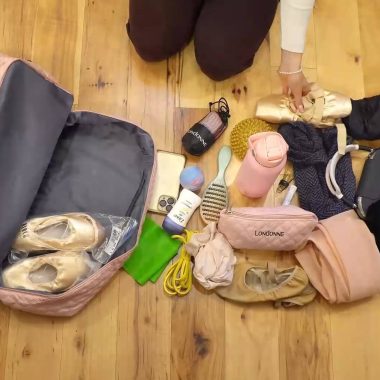
Even perfect pointe shoes do not work well without the right accessories. Here is what to keep in your ballet bag (you will find everything listed in our Accessories category):
- Gel toe pads – Protect the skin from blisters and pressure. Silicone models cushion better than cotton padding.
- Toe spacers – Placed between the big toe and the second toe, they align the toes in the box and reduce pressure and friction.
- Medical tape – Wrapped around the little toe or areas prone to blisters, it makes the difference between pain and dancing.
- Ribbons & elastics – Sewing them on correctly is an art. The elastic keeps the heel in place, and the satin ribbons hold the shoe snugly to the foot and ankle.
- Thread and needle – For sewing on ribbons and for darning the satin around the platform (for quieter, longer-lasting steps).
How to tell when your pointe shoes are “dead”
Pointe shoes wear out and need replacing in time – dancing on “dead” shoes is a common cause of injury. The signs of wear are:
- The shank has bent or broken – the shoe bends unevenly or gives no support at all in relevé
- The box has softened and the toes “sink” into it – the ballerina feels the floor beneath her toes rather than above them
- The fabric around the box is cracked or coming unglued
- The platform is worn through or uneven – balance becomes unstable
The average life of a pair depends on how intensively you train. At 2–3 hours a week – 2 to 3 months. With daily training – sometimes only 2–3 weeks.
Read more
- Getting Ready for a Summer Ballet Intensive: A Guide to the Must-Pack Essentials
- The Ballet Bag: What to Pack and How to Choose One
- How to Choose a Ballet Leotard: Everything About Fabric, Cut and Style
- Ballet Tights: The Complete Buying Guide
- Ballet Warm-Ups: Why You Need Them and How to Choose
- Back to the Ballet Studio After Summer: How to Get Back in Shape
Find the perfect pointe shoes for your foot
F.R. Duval and Freed of London pointe shoes with fast delivery across the EU. Every F.R. Duval purchase comes with a free gift.
Shop the collection