


Not All Tights Are the Same
Denier, foot type, colour, fabric – the complete guide to choosing ballet tights that nobody has told you about.
Ballet tights look like a simple choice – grab a pink pair, put them on and you are ready. The reality is more complicated. The wrong style, denier or size can cause blisters, spoil the feel of the floor when you are on pointe, or simply not meet your school’s requirements. Let’s clear it all up.
The four main types of ballet tights
Different situations call for different types of tights. Here is the full picture:
Full foot
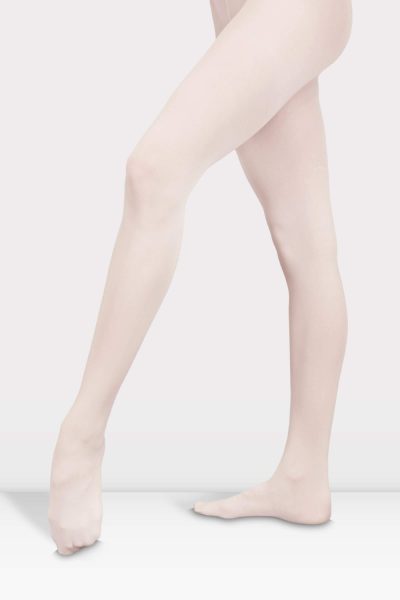
Standard tights with a closed foot. Suitable for ballet class, ballet slippers and jazz shoes. They give even compression along the whole leg.
Convertible
They have an opening under the sole or can be rolled up. Essential when working on pointe.
Footless
They end at the ankle. Suitable for modern ballet, contemporary and jazz. They leave the foot completely free for barefoot work.
Stirrup
They have an elastic strap under the foot that keeps the tights in place without covering the foot. Used for warm-ups or light training.
Convertible tights (with an opening under the sole) are the all-in-one solution for ballerinas who work in both ballet slippers and pointe shoes. Simply roll the end up when you put on your pointe shoes and down for slippers. No need to buy two separate pairs.
Denier and compression
The thickness of ballet tights is measured in denier (den) – the higher the number, the more opaque the tights:
| Denier | Description | Suitable for |
|---|---|---|
| 8–15 den | Sheer, very thin | Rare in ballet – only if the costume calls for it |
| 20–30 den | Semi-sheer | Exams, more formal classes |
| 40–60 den | Opaque, standard | Everyday training, regular classes |
| 70–100 den | Thick, with compression | Cold studios, warm-ups, rehabilitation |
For everyday ballet classes, tights in the 50–80 den range are the most common – thick enough to withstand intensive movement, but not so heavy that they dull the feel of the floor. Most of the tights at mjdance.bg fall in this range too.
Colours: rules and traditions
In ballet, the colour of your tights is not a matter of taste. Most ballet schools have strict requirements, and on stage the rule is almost universal. Here is what you need to know:
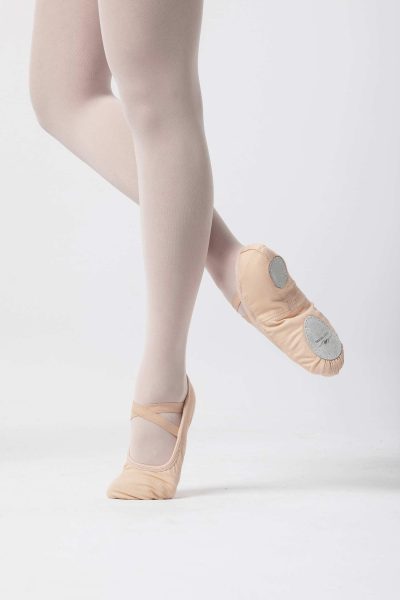
Ballet pink: The classic choice for classical ballet. It visually lengthens the line of the leg and blends the shoe into the tights. Required at most academic schools and in exams.
Nude: A more modern alternative to pink, especially for darker skin tones. It gives a more natural look and is recommended for contemporary ballet.
Black: The standard for jazz, contemporary and modern ballet. In classical ballet – only if the school or choreographer specifically asks for it.
White: Traditional for male ballet dancers and for some stage costumes. Female dancers rarely wear white for everyday training.
The right pair of tights is invisible – it extends the line of the leg without drawing attention to itself.
Fabric: what to look for?
Ballet tights are made from different fabrics, each with its pros and cons:
- Nylon + elastane (Lycra): The most common combination. Smooth, durable and easy to care for. A slightly synthetic feel, but excellent performance.
- Cotton + elastane: Softer and gentler on sensitive skin. More breathable. Less durable under intensive use – they tear sooner in pointe shoes and slippers.
- Microfibre: Ultra-soft and gentle. Excellent moisture-wicking. Ideal for children. A higher price.
- Compression fabrics: A special type that improves circulation and reduces fatigue. Suitable for longer rehearsals and for anyone prone to swelling.
Sizes: how to find the right one?
Ballet tights should fit snugly without squeezing. Tights that are too small restrict movement and cause discomfort; tights that are too big wrinkle, especially around the knee and ankle, which looks unprofessional and gets in the way of technique.
When choosing a size, go by both height and weight – most manufacturers offer a chart with both. If you are between sizes, take the larger one.
Buy tights in pairs. Ballet tights tend to ladder in one leg, leaving you with a useless pair. If you buy two pairs in the same size, when one ladders you can wear the two remaining “good” legs together.
Care and maintenance
- Wash at 30°C on a delicate cycle – hot washing destroys the fibres
- Never tumble dry – dry them flat
- Do not wring them out – roll them in a towel and press lightly
- If washing by hand, soak in cool water with a little mild detergent and do not rub
- Avoid fabric softener – it reduces the stretch of the fibres
- Keep your toenails trimmed and smooth – sharp edges are the number one enemy of dance tights
If you wear full-foot tights under pointe shoes, they will wear out much faster and you will get more moisture in the box of the shoe. That is why most ballerinas choose convertible tights with an opening under the sole – that way toe pads go directly on the skin.
Intermezzo, Harmony and Sansha – quality for every budget
At mjdance.bg you will find ballet tights from Intermezzo, Harmony and Sansha – trusted brands with many years of experience in dancewear. A range of colours, deniers and sizes for children and adults.
Read more
- Getting Ready for a Summer Ballet Intensive: A Guide to the Must-Pack Essentials
- The Ballet Bag: What to Pack and How to Choose One
- How to Choose Pointe Shoes: The Complete Guide
- How to Choose a Ballet Leotard: Everything About Fabric, Cut and Style
- Ballet Warm-Ups: Why You Need Them and How to Choose
- Back to the Ballet Studio After Summer: How to Get Back in Shape
Find the perfect ballet tights
A full range of colours, deniers and sizes. Intermezzo, Harmony and Sansha with fast delivery across the EU.
Shop the collection