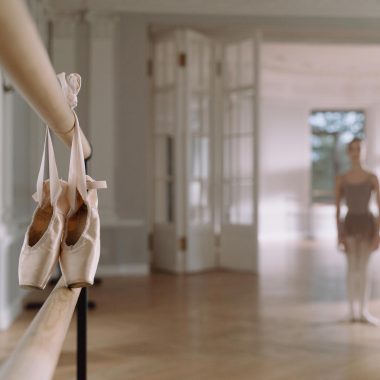



Full or split sole, leather or canvas, the right size, elastics and colour – everything you need to know before buying ballet slippers for yourself or your child.
Ballet slippers are the first thing we buy for ballet and the thing we wear the longest – from a child’s very first class to a professional’s last. They look simple: a little fabric or leather, a sole and an elastic. But it is exactly in these details that the difference lies between slippers that help the foot work correctly and slippers that get in the way. Here is how to choose the right ones.
What ballet slippers are and how they differ from pointe shoes
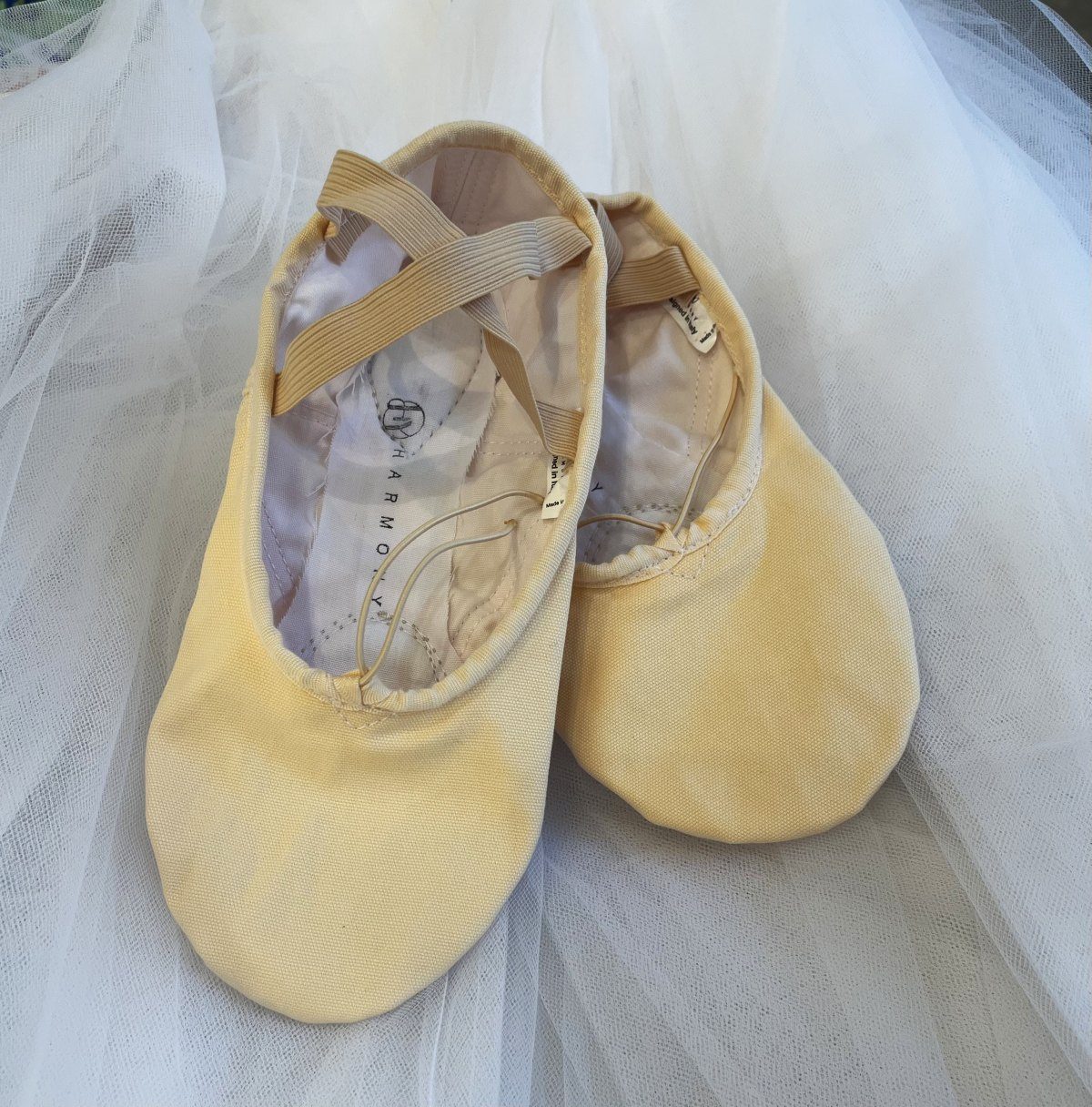
Ballet slippers (also called soft ballet shoes or ballet flats) are light shoes with no hard parts, in which you dance on the whole foot and on demi-pointe. They protect the foot from the floor and make sliding and turning easy, while leaving the foot free to move so that the correct point can be seen and trained.
Pointe shoes are a completely different kind of shoe – with a hard box and shank that let you dance on the tips of your toes. Dancers reach them after years of work in ballet slippers, and only when their teacher decides they are ready. If you are already thinking about that step, see our guide to choosing pointe shoes.
Good ballet slippers fit snugly like a sock, the toes lie straight without curling, and the elastic holds the shoe without digging in. Choose the sole and the fabric according to the dancer’s level and the school’s requirements.
1. Full sole or split sole
This is the first and most important choice. The sole determines how much support the foot gets and how easily its line can be seen.
Full-sole ballet slippers
The sole runs uninterrupted from the toes to the heel. It gives more structure and resistance under the arch, so the foot has to work harder to point. Many teachers recommend them for children and beginners – they are stable, durable and help build strength in the foot.
Split-sole ballet slippers
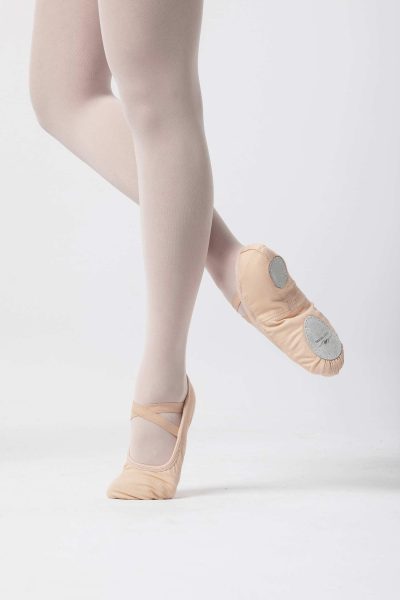
The sole is in two separate parts – under the ball of the foot and under the heel – with nothing under the arch. The shoe is more flexible, hugs the foot more closely and highlights the curve of the arch and the line of the foot. That is why advanced dancers prefer it – and more and more adult beginners choose it too.
| Full sole | Split sole | |
|---|---|---|
| Support | More structure and stability | Less structure, more freedom |
| Flexibility | Stiffer, the foot works against resistance | Very flexible, easy to point |
| Line of the foot | The arch shows less | Highlights the arch and the curve |
| Suitable for | Young children and beginners | Advanced dancers, teenagers, adults |
| Example at MJ Dance | Intermezzo Media Punta FS Basic | Sansha PRO1c |
There is no “right” sole for everyone. There is the sole that is right for your level, your foot and your school.
Teachers have different views. Some believe a full sole builds strength in the foot and is a must at the start. Others prefer a split sole from the very first classes because it shows whether the foot is really pointed. So the safest option is to ask your child’s teacher or your own instructor before you buy.
2. Material: leather, canvas or stretch
Ballet slippers are made from three main materials. The choice comes down to preference, budget and school requirements – and all three do the job if the shoe is the right size.
Leather
Durable, soft and gives good grip on the floor. Over time it moulds to the foot and stretches slightly – keep this in mind when choosing the size. Most common in full-sole slippers for beginners.
Canvas
Light, breathable and softer than leather. It hugs the foot closely and does not stretch as much. Split-sole canvas slippers are a favourite of many advanced dancers.
Stretch canvas
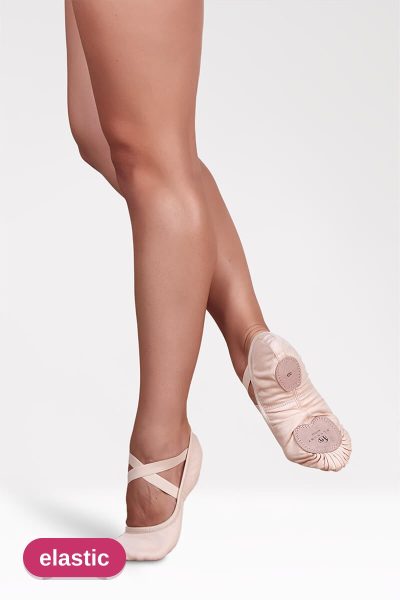
An elastic fabric that follows every movement and fits like a second skin. It shows off the arch best and forgives small differences in foot shape.
Leather slippers stretch as you wear them, so buy them snug from day one. Canvas and stretch barely change size, so with them look for comfort right from the start.
3. How to choose the right size
Size is where most mistakes happen. Ballet slippers should not fit like everyday shoes – they should fit snugly like a sock, with no empty space but without squeezing. Ballet slipper sizing differs from street shoes and between brands, so always check the size chart for the specific model.
Signs that the size is right
- The toes lie straight – they do not curl, overlap or press painfully against the end of the shoe.
- There is no excess fabric – especially at the toes and around the heel. If you can pinch the material, the slippers are too big.
- The heel stays in place – the shoe does not slip off in relevé or when jumping.
- The sides do not squeeze – pressure on the sides of the foot usually means the shoe is too narrow.
- The foot points freely – in pointe and flex the slipper follows the foot without bunching.
How to try on ballet slippers
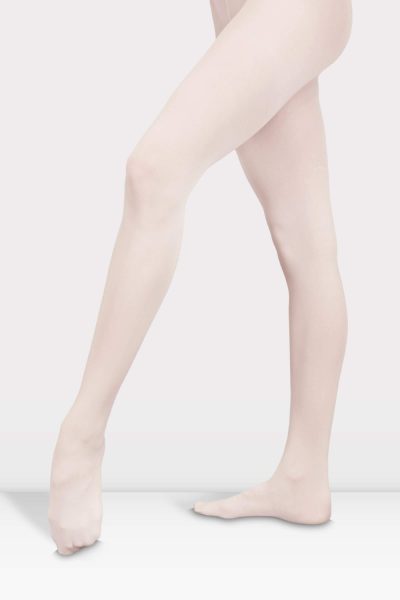
- Try them on with the tights you will train in – their thickness changes the fit. If you need new ones, see our guide to ballet tights.
- Try them on in the afternoon or evening, when the foot is slightly swollen after the day.
- Stand on the whole foot, do a demi-plié and a relevé and point the foot – don’t judge only while sitting down.
- If you are ordering online, measure the length of the foot in centimetres and compare it with the manufacturer’s chart.
Buying a child slippers a size bigger “so they’ll last until next year”. In big slippers the toes cannot point, the shoe bunches up and the child trips. This gets in the way of technique and can lead to falls. Ballet slippers are bought for the foot’s current size.
4. Elastics and drawstring
The elastics hold the slipper on the foot. They should be tight enough that the shoe doesn’t slip off, but they must not dig into the top of the foot, restrict circulation or limit pointing.
- A single elastic – across the top of the foot. Classic and easy for beginners.
- Two crossed elastics – they form an “X” over the arch. They hold better and visually lengthen the line of the foot, so advanced dancers prefer them.
- Sewn-on elastics – all slippers in our ballet slipper category come with the elastics already sewn on, so they are ready for class straight away.
Most slippers also have a drawstring around the edge for adjusting the fit. Pull it until the shoe hugs the foot, tie a double knot and tuck the ends inside the slipper. Don’t cut the drawstring too short – you will need it if you have to loosen it. Dangling ends are not allowed at most schools.
5. Colour
In classical ballet the foot should extend the line of the leg. That is why the colour of the slippers is chosen together with the tights:
- Ballet pink or nude – for girls and women in pink or nude tights, and when dancing bare-legged.
- Black – traditional for boys and men, and for some contemporary and jazz classes. See, for example, the black Harmony MP522 slippers.
- White – for boys in white socks and for some exams and performances.
Many schools have a set uniform, including the colour of the slippers. Check the requirements before you buy.
6. Ballet slippers for children
For a child’s first classes, look for comfortable, durable slippers that are easy to put on. Full-sole leather slippers are the classic choice for little dancers because they are stable and last a long time. Split-sole canvas models, such as the Sansha Juli S23c children’s slippers, are light and soft and are also used by many schools.
Children rarely say their slippers have become too small – they just dance more cautiously. Check the size every few months: ask your child to rise onto their toes and point the foot, and see whether the toes touch the end of the slipper. Young children’s feet grow fast, and one pair rarely lasts a whole year.
Which slippers for whom?
| Dancer | Suitable choice |
|---|---|
| Young child, first classes | Full sole, leather or canvas, sewn-on elastics |
| Ballet school student | As the teacher requires – often a split sole, canvas |
| Adult beginner | A split sole in canvas or stretch for comfort and better feedback, or a full sole if the teacher recommends it |
| Advanced dancer | Split sole, stretch canvas, crossed elastics |
| Boys and men | Black or white slippers, usually with a split sole |
7. Care and when to replace your slippers
With a little attention, ballet slippers last much longer:
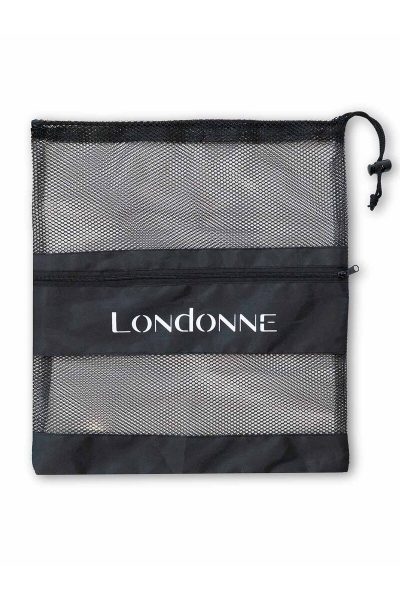
- Air them out after every class – don’t leave them shut in a damp bag. It helps to give them their own case or pouch; see what to pack in your ballet bag.
- Canvas slippers can be hand-washed in cool water with a mild detergent and air-dried away from the radiator.
- Leather slippers are not washed – wipe them with a slightly damp cloth and let them dry naturally.
- Don’t wear them outdoors – dust and sand wear down the sole and make it slippery.
| Sign | What it means |
|---|---|
| The toes touch the end or curl | The foot has grown – time for a new size |
| A worn or torn sole | You lose grip and support – replace them |
| Stretched, loose elastics | The elastics can be replaced without buying new slippers |
| A hole at the toes | The slippers no longer protect the foot – time for a new pair |
The ballet slipper brands at MJ Dance
Sansha
A French brand with a long history in ballet shoes. The split-sole PRO1c model comes in several colours, while the Julia S25c and the children’s Juli S23c are a comfortable choice for students. See all Sansha products.
Intermezzo
A Spanish brand with two different slipper models: the full-sole leather Media Punta FS Basic for beginners and the split-sole stretch canvas Media Punta SS Stretch. Browse the Intermezzo collection.
Harmony
Split-sole canvas and stretch canvas slippers, including the elastic ANYMA Stretch Canvas and the classic MP522 in pink and black. See Harmony products.
Frequently asked questions
Which sole should I choose for my first ballet slippers?
For young children and complete beginners a full sole is usually recommended, because it gives stability and builds strength in the foot. Adult beginners and more advanced dancers usually prefer a split sole. If you are unsure, ask your teacher.
Should ballet slippers be bigger than my everyday shoes?
No. Ballet slippers should fit snugly like a sock, with no extra room at the toes. Sizing differs from street shoes and between brands, so go by the size chart for the specific model and by the length of your foot in centimetres.
Are leather or canvas ballet slippers better?
Both are a good choice. Leather is durable and gives more grip, but it stretches with wear. Canvas is lighter, breathable and fits snugly. Stretch canvas is the most flexible and shows off the arch best.
How often should ballet slippers be replaced?
It depends on how often you have class and on how fast the foot grows. Children usually replace their slippers once or twice a year because they grow. Replace them as soon as the toes start to curl, the sole wears through or a hole appears.
How do you tie the drawstring on ballet slippers?
Pull it until the slipper fits snugly, tie a double knot and tuck the ends inside the shoe. Do not cut it too short, so that you can loosen it later.
The right ballet slippers won’t make you a better dancer on their own, but they make work in the studio more comfortable, safer and more effective. Choose the sole according to your level, the material according to your preference, and the size – always for the foot as it is now. And if you have questions, visit our shop in Varna or write to us – we’ll help you find the exact model.
Read more
- How to Choose Pointe Shoes: The Complete Guide
- How to Choose a Ballet Leotard: Everything About Fabric, Cut and Style
- Ballet Tights: The Complete Buying Guide
- The Ballet Bag: What to Pack and How to Choose One
- Back to the Ballet Studio After Summer: How to Get Back in Shape
Find your ballet slippers
Full-sole and split-sole ballet slippers from Sansha, Intermezzo and Harmony – for children and adults, with fast delivery across the EU.